Enjoy exclusive sales on pomskies!

What is a Pomsky? Complete Breed Guide for European Families
What is a Pomsky? Complete Breed Guide for European Families If you've stumbled across the word "Pomsky" and wondered what exactly this breed is - you're not alone. Over the past decade, Pomskies have become one of Europe's most sought-after designer dogs. But what makes them so special? And is a Pomsky the right companion for you?
Complete Breed Guide for European Families
7/29/20267 min read

Introduction to the Pomsky Breed
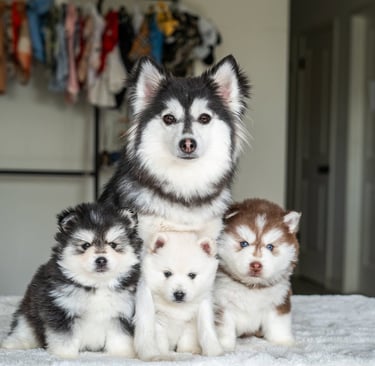
The Pomsky is a relatively new and increasingly popular designer dog breed that results from the crossbreeding of a Pomeranian and a Siberian Husky. This hybrid breed brings together the affectionate disposition of the Pomeranian and the striking appearance along with intelligence of the Siberian Husky, creating a unique canine companion that captures the hearts of many dog enthusiasts, especially in Europe.
Originating in the 2010s, the Pomsky was developed primarily for the desire to combine the best traits from both parent breeds. Aimed at producing a smaller version of the Husky, the breed has gained traction for its appealing aesthetics and lively personality while also promoting the benefits of hybrid vigor. As the Pomsky continues to gain traction in various countries, it has become a preferred choice for families who appreciate both the cuteness factor and a playful demeanor.
The Pomsky is characterized by its fluffy coat, which often mirrors that of the Siberian Husky, but can vary significantly in color and texture, reflecting the diversity of its parent breeds. This breed typically showcases captivating blue or multicolored eyes, contributing to its charm. With its small to medium size, the Pomsky is well-suited for families living in apartments or homes with limited space, yet it still requires regular exercise to maintain a healthy lifestyle.
Additionally, Pomskies are known for their vibrant and sociable nature, often bonding closely with their families. They are playful and can exhibit a mischievous side, making them entertaining companions. Their intelligence allows them to be trained effectively, although they may sometimes display a stubborn streak inherited from their Pomeranian lineage. Overall, the Pomsky has become immensely popular due to their appealing traits, making them ideal pets for families across Europe.
Pomsky Size: Understanding Their Dimensions
Pomskies are a captivating crossbreed between the Siberian Husky and the Pomeranian, resulting in a dog that is both striking in appearance and appealing in size. The typical weight of a Pomsky ranges from 20 to 30 pounds, with a height that falls between 10 to 15 inches at the shoulder. This compact size makes them an advantageous choice for families, particularly those residing in urban environments where living space is limited.
The dimensions of a Pomsky allow them to adapt well to apartment living, where larger breeds may face challenges. Their manageable size means they can comfortably navigate smaller living areas while still getting plenty of exercise during walks or playtime at nearby parks. Additionally, their playful and energetic nature aligns perfectly with family activities, making them a popular choice for those with children.
The size of Pomskies can vary significantly depending on their generation. F1 generation Pomskies, which are a first-generation cross between a husky and a Pomeranian, often exhibit dimensions closer to their parent breeds. In contrast, second-generation or more advanced generations can result in variations in size and appearance, influenced by the specific lineage of the Pomsky's family. For potential owners, understanding these generational differences is crucial in setting realistic expectations for their pet's size and characteristics.
It is essential for prospective Pomsky owners to consider these aspects when selecting a puppy. An ideal Pomsky will not only match the family's lifestyle but also fit comfortably into their living situation. Through careful breeding and generation selection, families can find the perfect Pomsky that aligns with their home dynamics and personal preferences.
Generations of Pomskies: F1, F3, and F4 Explained
The Pomsky, a hybrid breed arising from the cross between a Siberian Husky and a Pomeranian, comes in various generations, each defined by the parentage and subsequent breeding of the dogs involved. Understanding these generational classifications—F1, F3, and F4—is essential for potential owners to grasp the characteristics and behaviors they can expect from their new pet.
An F1 Pomsky is the first generation, resulting from a direct cross between a purebred Siberian Husky and a purebred Pomeranian. F1 Pomskies typically display a wide range of physical traits and temperaments, since they inherit qualities from both parent breeds. This generation is often sought after due to its relatively high level of genetic diversity. However, this variability can make it challenging to predict specific traits in terms of size and temperament.
Moving to F3 Pomskies, these offspring are bred from two F2 Pomskies or an F1 Pomsky and an F2. By the time one reaches the third generation, the breeding process starts to focus more on consistency in physical appearance and temperament. This makes F3 Pomskies more reliable choices as family pets, as they tend to have more predictable traits. Breeders often aim for healthier traits with reduced genetic issues, making them an appealing option for responsible pet owners.
F4 Pomskies are the result of two F3 Pomskies breeding together. At this stage, the puppies have a much more standardized look and behavioral traits, which can give families confidence in their choice. The predictability in size, temperament, and health concerns only enhances the appeal of acquiring Pomskies from reputable breeders focusing on these later generations.
Personality and Temperament of Pomskies
The Pomsky is a hybrid breed, a charming amalgamation of the Siberian Husky and the Pomeranian, which gives rise to a unique personality and temperament. Characteristically, Pomskies are known for their loyalty, making them devoted companions to their families. Their strong bond with their human caregivers is noteworthy; they thrive on attention and enjoy being part of every activity, making them excellent family pets.
One of the most appealing traits of a Pomsky is their playfulness. They are energetic dogs that require both mental and physical stimulation to remain happy. Engaging in activities such as fetch, agility training, or even simple walks can provide the necessary outlets for their exuberance. Without adequate exercise or stimulation, Pomskies may resort to disruptive behaviors, underscoring the importance of a structured routine.
Intelligence is another commendable quality in Pomskies. They are quick learners and often excel in obedience training. Their eagerness to please combined with their cleverness can lead to rewarding training experiences. However, prospective owners should be mindful that this intelligence also means Pomskies are adept at getting into mischief if not properly supervised. Hence, consistent training and positive reinforcement methods are essential.
Socially, Pomskies are typically friendly and enjoy interacting with both people and other animals. Early socialization is crucial to ensure they grow up to be well-adjusted dogs. They generally possess a vocal nature, often expressing their thoughts through barking, which can serve as both a means of communication and a playful way to engage with their surroundings. Understanding the personality traits of Pomskies can greatly assist potential owners in making informed decisions about this lively breed.
Health and Lifespan of Pomskies
The Pomsky, a hybrid dog breed that combines the Pomeranian and Siberian Husky, is known for its striking appearance and energetic personality. However, like all breeds, Pomskies can be prone to certain health issues. Understanding these health considerations is paramount for prospective owners. Common health concerns in Pomskies include hip dysplasia, progressive retinal atrophy, and heart conditions. Responsible breeding practices play a crucial role in minimizing these risks.
Reputable breeders of Pomskies conduct thorough health screenings of both parent breeds before breeding. This includes genetic tests to identify potential hereditary conditions. By ensuring that the parent dogs are free from these genetic disorders, breeders can significantly reduce the likelihood of health problems in the offspring. Owners should look for breeders who can provide documentation of health screenings for both the Pomeranian and Siberian Husky, thus promoting transparency and responsible breeding standards.
The average lifespan of a Pomsky is typically between 12 to 15 years. Factors such as genetics, diet, exercise, and regular veterinary check-ups play an important role in determining the longevity of a Pomsky. A balanced diet, appropriate exercise regimen, and routine health assessments can help maintain optimal health and support a long, fulfilling life for your furry companion.
Additionally, potential Pomsky owners should be aware of the importance of socializing and training their puppies from a young age. A well-socialized Pomsky is not only more suited to diverse environments but is also less likely to develop behavioral issues that can sometimes be linked to anxiety or stress. Taking proactive steps in the early stages of a Pomsky’s life can greatly enhance their well-being and reduce the risks associated with health or behavioral problems.
Training Your Pomsky: Tips and Techniques
Training a Pomsky, a hybrid of a Siberian Husky and a Pomeranian, can be a rewarding experience due to their high intelligence and energy levels. It is imperative for new owners to adopt effective strategies to ensure a well-trained and balanced dog. One of the most effective methods to engage a Pomsky is through positive reinforcement. This training technique involves rewarding desirable behaviors with treats, praise, or playtime, which encourages your pet to repeat these actions. By creating a positive atmosphere, Pomskies will be more eager to learn and follow commands.
Socialization is another critical aspect of training a Pomsky. Given their dynamic nature, exposing them to various environments, people, and other pets can help reduce anxiety and behavioral issues in the future. Gradually introducing your Pomsky to new situations can build their confidence and adaptability, essential traits for a well-rounded dog. Start with controlled environments and slowly progress to busier places as your Pomsky becomes more comfortable.
Mental stimulation plays a vital role in a Pomsky's training regimen. These dogs thrive when challenged, both mentally and physically. Incorporating puzzle toys, agility training, or obedience exercises can keep their minds engaged and reduce destructive behaviors resulting from boredom. Regular exercise, such as daily walks or playtime in a secure yard, is equally important for their physical health and overall well-being.
In summary, achieving successful training for your Pomsky involves a combination of positive reinforcement, socialization, and mental engagement. By patiently implementing these techniques, you can foster a healthy and trusting relationship with your Pomsky, paving the way for a harmonious family environment. Investing time in training will not only enhance your dog's quality of life but also strengthen the bond you share with them.
Is a Pomsky Right for Your Family?
When considering if a Pomsky is the suitable companion for your family, several factors should be assessed. One of the most crucial is lifestyle compatibility. Pomskies are known for their high energy levels and playful demeanor; they thrive in active households where they can engage in regular exercise and mental stimulation. If your family enjoys outdoor activities such as hiking, running, or playing fetch, a Pomsky could be an excellent match.
Additionally, the living arrangements you have will also play a significant role in determining compatibility. While Pomskies can adapt to different living situations, they do best in homes that offer space to roam. Families living in apartments should ensure they can provide frequent outdoor access and ample opportunities for exercise. A backyard can be beneficial for Pomskies to burn off some of their energetic spirit, while also providing a secure environment for play.
Furthermore, the commitment required for training and socialization cannot be overlooked. Pomskies are intelligent and can exhibit stubbornness; thus, consistent training is essential. Families should be prepared to devote time to obedience training and socializing the dog with various environments, people, and other pets. Understanding the needs of a Pomsky—including mental engagement through toys and activities—will help in fostering a well-adjusted and happy companion.
Ultimately, bringing a Pomsky into your home is a substantial commitment that necessitates evaluating your lifestyle, living conditions, and the willingness to engage in training and social activities. Thoroughly considering these factors will help you determine if this unique and spirited breed can thrive within your family structure.